
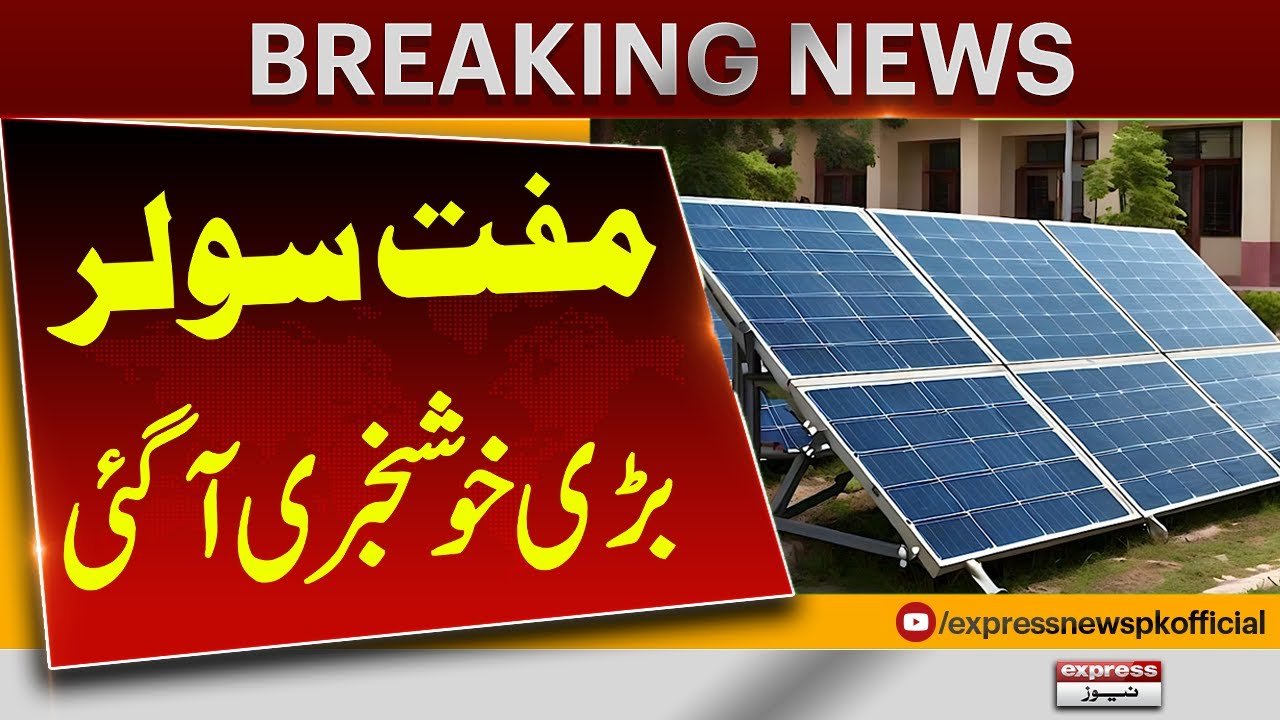
Learn about the Punjab Free Solar Panel Project 2025 eligibility criteria for households consuming 100 to 300 electricity units. Find out who qualifies, how to apply, and what benefits are included.
🌍 Introduction
The Punjab Government, under CM Maryam Nawaz Sharif, has launched the Free Solar Panel Project 2025 to help poor families reduce electricity bills and adopt renewable energy. The scheme will distribute 100,000 solar systems free of cost to households across Punjab.
Currently, the project targets families consuming up to 200 electricity units per month, but discussions are ongoing to expand eligibility up to 300 units in later phases.
🎯 Objective of the Solar Panel Project
The project aims to:

- Reduce electricity bills for poor families.
- Promote renewable energy and reduce dependence on fossil fuels.
- Provide uninterrupted power supply during load-shedding.
- Support environmental sustainability by lowering carbon emissions.
📝 Eligibility Criteria
The eligibility is based on monthly electricity consumption and household status:
| Category | Units Consumed | Eligibility Status |
|---|---|---|
| Life Line Consumers | 0–50 units | ✅ Eligible |
| Protected Consumers | 51–100 units | ✅ Eligible |
| Protected/Unprotected | 101–200 units | ✅ Eligible |
| Higher Consumption | 201–300 units | ❌ Not eligible (may be added in future phases) |
👉 Families consuming 100–200 units are the main beneficiaries in the first rollout phase.
⚡ Solar System Sizes
The government will provide different solar system sizes depending on consumption:
| Units Consumed | Solar System Size | Details |
|---|---|---|
| Up to 100 units | 0.55 kW system | Basic solar setup for small homes |
| 101–200 units | 1.1 kW system | Larger system for medium households |
| 201–300 units | Under review | May be included in future expansion |
✅ Benefits of the Solar Panel Project
- Free solar panels for poor families.
- Reduced electricity bills (up to 80% savings).
- Reliable power supply during load-shedding.
- Promotion of renewable energy in Punjab.
- Environmental benefits by reducing carbon footprint.
📊 Step-by-Step Application Process
- Visit the Punjab Solar Panel Portal (to be launched officially).
- Enter your CNIC number.
- Provide your electricity bill details (units consumed).
- Submit the application.
- Wait for SMS confirmation of eligibility.
👉 Families already registered in BISP/Ehsaas programs may get priority access.

📝 CM Punjab 6 Solar Panel Project Registration 2025
Families can register for the 6 Solar Panel Project through the official Punjab Solar Portal.

Steps for Registration:
- Visit the Punjab Solar Panel Project portal.
- Enter your CNIC number.
- Provide electricity bill details (monthly units consumed).
- Submit the form online.
- Receive SMS confirmation if eligible.
👉 Families already registered in BISP/Ehsaas programs may get priority access.
⚡ Distribution of 3 KW & 6 KW Solar Panel Project
The government will distribute solar systems based on household electricity usage:
| Units Consumed | Solar System Size | Details |
|---|---|---|
| Up to 100 units | 0.55 kW system | Basic solar setup for small homes |
| 101–200 units | 1.1 kW system | Medium households |
| 201–300 units | 3 KW system | Larger homes (pilot phase) |
| Above 300 units | 6 KW system | Planned for future expansion |
👉 The 3 KW and 6 KW systems will be distributed to families with higher electricity usage once the pilot phase is successful.
✅ Which People Can Get Free Solar Panels
The project is designed for poor and middle-income families.
| Eligible Group | Details |
|---|---|
| Life Line Consumers | Families using 0–50 units per month |
| Protected Consumers | Families using 51–100 units per month |
| Low-Income Households | Families using 101–200 units per month |
| Middle-Income Households | Families using 201–300 units (pilot phase) |
| Future Expansion | Families using above 300 units may get 6 KW systems in later phases |
👉 Families with no electricity theft record and valid CNIC are prioritized.
📊 Step-by-Step Application Process
| Step | Action | Details |
|---|---|---|
| 1 | Visit Portal | Go to Punjab Solar Panel Project website |
| 2 | Enter CNIC | Provide CNIC number and electricity bill details |
| 3 | Submit Form | Fill in household information |
| 4 | Verification | Government verifies eligibility |
| 5 | Confirmation | SMS sent to eligible families |
| 6 | Installation | Solar system installed at household |
🛡️ Safety & Transparency
- Only verified households will receive solar systems.
- No electricity theft or default record allowed.
- Distribution will be monitored by the Punjab Energy Department.
❓ Frequently Asked Questions (FAQ)
1. Who is eligible for free solar panels?
Households consuming 0–200 units per month.
2. Are families using 300 units eligible?
Not in the first phase. They may be included in future expansions.
3. What size solar system will I get?
- 0.55 kW for up to 100 units.
- 1.1 kW for 101–200 units.
4. How many families will benefit?
Around 100,000 households across Punjab.
5. Is there any cost?
No, the system is 100% free for eligible families.
📌 Final Words
The Punjab Free Solar Panel Project 2025 is a groundbreaking initiative to support poor families and promote renewable energy. Currently, households consuming 100–200 units per month are eligible, while those using up to 300 units may be considered later. This project will reduce electricity bills, provide reliable energy, and contribute to a greener Punjab.

